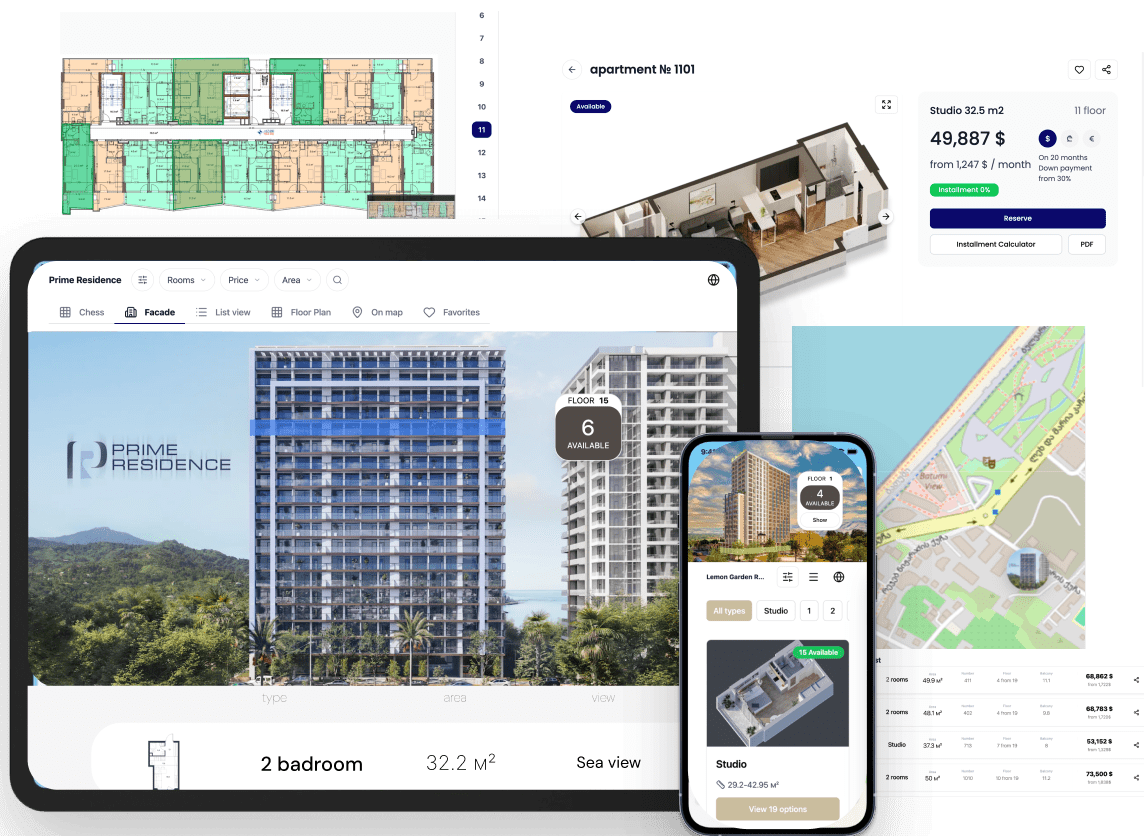
Interactive chessboard for developers: how to choose an IT solution for a residential complex website

When choosing an apartment in a new building, buyers expect to see up-to-date prices, floor plans, and window locations. If a residential complex's website instead displays a static PDF brochure or an outdated spreadsheet, the developer loses up to 401,000,000 rubles in targeted traffic. An interactive apartment selector solves this problem, but integrating it into the developer's business processes requires a systematic approach.
Why does a developer need a digital chessboard for a residential complex?
In modern development, a new building's website is more than just a business card, but the first entry point into the sales funnel. An interactive master plan/unit selector links the website to the apartment database and CRM system. Its key objectives are:
- Elimination of human factor: Managers no longer need to manually change apartment statuses on the website. If an apartment is booked in the CRM, its status is instantly updated for buyers.
- Reducing the transaction cycle: The client sees available lots, selects a layout, and submits a reservation request in one click.
- Transparency for realtors: External agents see actual inventory and do not offer clients properties that have already been sold.
Criteria for choosing a PropTech solution
When choosing a platform for catalog automation, it is important for a developer to evaluate three key factors:
1. Speed and depth of CRM integration
The checkerboard shouldn't operate independently. Any change in amoCRM or Bitrix24 (change in deal stage, price change, booking) should be instantly reflected on the website. Two-way synchronization ensures no duplicate data.
2. Adaptability and mobile traffic
The widget must open correctly on mobile devices, which account for up to 70% of traffic to residential complex websites. Floor plans must be scalable, and 3D renderings and floor plans must load without delay.
3. Availability of additional sales tools
Modern solutions offer not only a network of apartments, but also personal accounts for realtors, dynamic pricing systems, and online payment modules for reservations.
Comparative Analysis of Solutions: GRIDIX, Profitbase, and Domoplaner
Several IT products for automating new building catalogs are available on the CIS market. Each solution addresses specific business needs:
- Profitbase: A large ecosystem with a wide range of modules. Suitable for large developers with extensive IT infrastructures. Implementation and configuration are time-consuming (typically 2 to 4 weeks).
- GRIDIX: A focused AI sales ecosystem with an emphasis on rapid digitization (3-5 days) and deep CRM synchronization. Includes a built-in partner dashboard and AI-powered apartment search modules.
- Domoplaner: A simple and affordable solution for small regional developers, focused on basic grid accounting without complex integrations.
How does chessboard integration affect project economics?
Implementing an interactive catalog pays for itself through reduced cost per acquisition (CPA) and increased conversion rates. When buyers independently explore apartment layouts and locations, the sales team receives more qualified leads. Managers don't waste time asking if an apartment is available, but rather move straight to discussing the terms of the transaction and mortgage.
For developers operating in competitive locations, having a user-friendly smart catalog becomes a differentiator, increasing the loyalty of both direct buyers and the agency community.
Learn more about the GRIDIX platform: turnkey implementation in 3-5 days or affiliate program for real estate agencies.